CONTACT:
John Neurohr, jneurohr@clearpointpa.com, 717-364-6452
View a recording of the report release press webinar here.
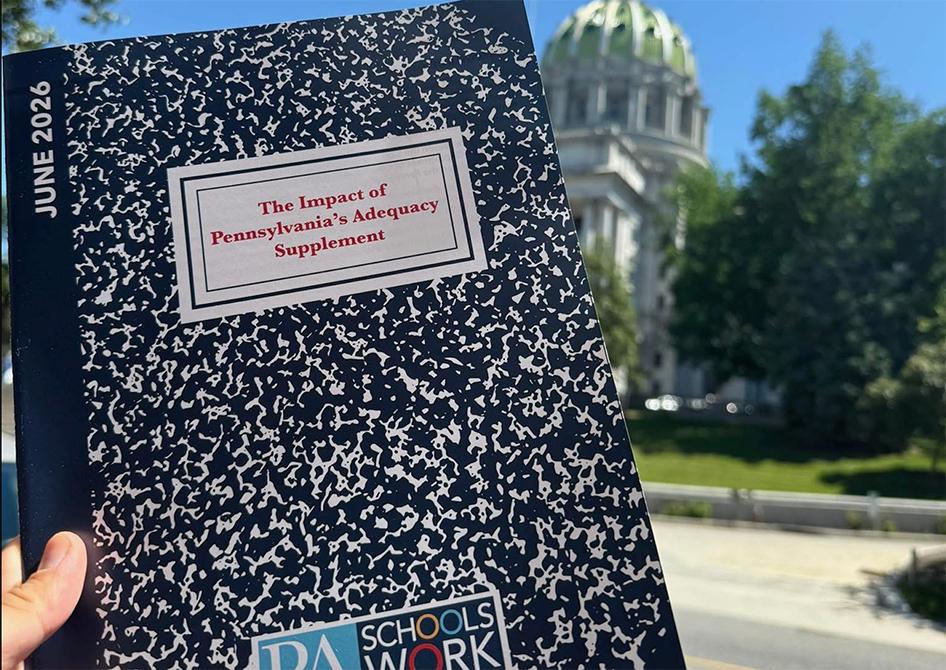
HARRISBURG — PA Schools Work today released a new report, The Impact of Pennsylvania’s Adequacy Supplement, detailing how Pennsylvania’s first year of the new adequacy supplement is helping school districts hire essential staff, reduce class sizes, expand career and technical education, strengthen early literacy, and improve student well-being.
The report is based on interviews with more than 40 superintendents and school leaders from rural, suburban, and urban districts, as well as statewide spending data reported to the Pennsylvania Department of Education. The report finds that the inaugural $494 million adequacy supplement, distributed via the Ready to Learn Block Grant in the 2024–25 budget, reached 348 school districts serving 1,494,950 students, or 88% of Pennsylvania students.
“Pennsylvania has a constitutional obligation to provide every student with a thorough and efficient education,” said Susan Spicka, Executive Director of Education Voters of PA. “This report shows the adequacy supplement is helping districts deliver real, measurable improvements for students, and it’s beginning to relieve pressure on local property taxes in communities that already shoulder some of the heaviest burdens.”
Adequacy dollars are translating into immediate classroom improvements
School leaders interviewed for the report described the adequacy supplement as a “lifeline” and emphasized that the new state investment is not an add-on; it is essential to delivering a high-quality education.
Examples highlighted in the report include:
- Hiring essential staff to meet students’ needs, including social workers, counselors, special education teachers, and instructional staff.
- Reducing class sizes in early grades to strengthen foundational learning.
- Maintaining or expanding full-day kindergarten and early learning opportunities.
- Investing in high-quality curriculum and instructional materials to improve student outcomes.
- Strengthening career and technical education (CTE) so more students can access real-world skills and credentials.
Superintendent Dave McAndrew of Panther Valley School District said the district used adequacy funding to hire an elementary science teacher, a social worker, a guidance counselor, and a special education teacher. “These positions made an immediate difference,” McAndrew said. “Adequacy funding isn’t extra. It’s essential.”
Superintendent David Burkett of Everett Area School District said the additional resources “translate directly into resources in classrooms,” and described the funding as “the life-preserver being thrown to rural school districts like ours.”
“The funds for us have been a lifeline,” said Superintendent Thomas Mitchell of Westmont Hilltop School District. “We’re able to do a better job of educating our kids and making sure they’re pursuing something that they’re interested in.”
“This funding allows us to say, ‘Yes, this is the right resource for our students,’ shifting the conversation from affordability to effectiveness,” said Superintendent Christopher Gatto of Old Forge School District.
Statewide spending data show consistent, student-centered investments
“When you look at the statewide data and the interviews for this report, the picture is clear: districts are using these resources for the things that make the biggest difference in students’ day-to-day learning – strong early literacy and math, full-day kindergarten, student supports, and workforce-ready programs,” said Laura Beltran, Director of Policy and Research for the Pennsylvania Policy Center, who led the data analysis for the report. “This is targeted, student-centered spending, and it shows why sustaining and growing the adequacy supplement matters for communities across Pennsylvania.”
Under state rules, districts report how they allocate adequacy supplement funds among allowable uses. The report finds that districts spent 87% of reported adequacy dollars across eight main categories, including:
- Academic performance of students ($123.3M)
- Early childhood and kindergarten ($89.6M)
- STEM and foundational academic supports ($72.7M)
- Charter school tuition increases ($43.4M)
- College & career readiness ($34.1M)
- Student well-being & support services ($31.9M)
- Targeted English learner support ($26.6M)
- Class size reduction K–3 ($14.6M)
The report concludes that lawmakers should build on early progress by continuing to invest in adequacy funding in future budgets.
“Adequacy funding is an investment in every community’s future workforce and economy,” said Priyanka Reyes-Kaura, K-12 Education Policy Director for Children First. “We’re seeing what happens when districts finally have the resources to provide a strong foundation for students. Pennsylvania should finish the job.”
Read the report
The Impact of Pennsylvania’s Adequacy Supplement is available at: https://paschoolswork.org/adequacy-report-june-2026/
Participating school districts (interviewed for this report)
- Avon Grove School District
- Bald Eagle Area School District
- Bethlehem Area School District
- Blue Ridge School District
- Bristol Township School District
- California Area School District
- Carlisle Area School District
- Chambersburg Area School District
- Chester Upland School District
- Coatesville Area School District
- Downingtown Area School District
- Everett Area School District
- Hollidaysburg School District
- Homer-Center School District
- Iroquois School District
- Kane Area School District
- Kennett Consolidated School District
- Lehighton Area School District
- Mount Carmel Area School District
- Neshaminy School District
- New Kensington Arnold School District
- Norristown Area School District
- Norwin School District
- Old Forge School District
- Otto-Eldred School District
- Oxford Area School District
- Panther Valley School District
- Pottstown School District
- Rockwood School District
- School District of Philadelphia
- Scranton School District
- Shenandoah Valley School District
- Shippensburg Area School District
- Southeast Delco School District
- Union Area School District
- Upper Darby School District
- West Chester Area School District
- Westmont Hilltop School District
- William Penn School District
- Windber Area School District
- Woodland Hills School District
- Wyoming Valley West School District